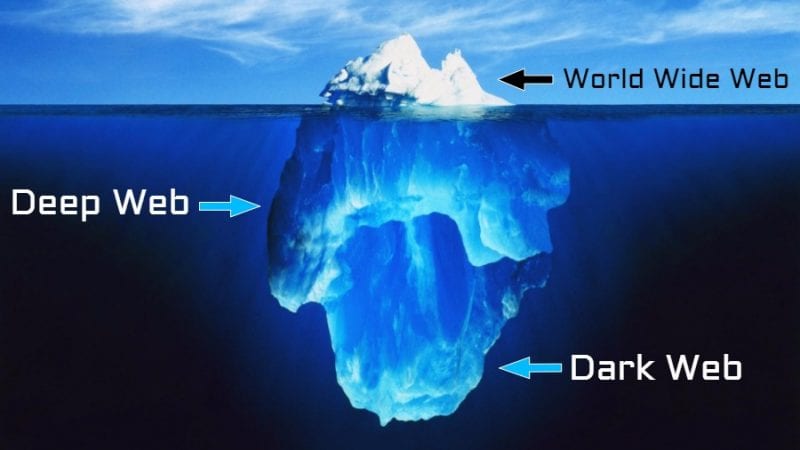
In this way, the Deep Web is a constituent part of today’s Internet usage. The Dark Web is a segment of the Deep Web, which typically hosts illegal affairs, but not everything on it is illegal. Dark Web illegal activities can lead to severe legal actions, such as arrest, and so it must be taken very seriously by the users. To understand the differences in the dark vs deep web, one comes to realize that there are legitimate uses and significant risks in both layers.

What Percentage Of The Internet Is Dark Web?
Most of what you see in search results is just a small slice of the internet. In fact, only about 4% of the web is indexed, meaning it shows up in standard search engines. Though the dark web may not be the monster it’s often made out to be, its very existence poses a risk to the rest of the World Wide Web.
Ways Agentic AI Is Transforming Cybersecurity
They know how to process the information and get it to the correct law enforcement agencies internationally. You risk being targeted for attacks if you explore the dark web without protection. The threat can extend to your entire network of devices connected to the internet. If the above average Joe’s explanation isn’t enough for you, below are some legitimate reasons to use the Dark Web in a bit more detail. Remember that illegal activities can still incriminate you, whether you are using a Tor browser. For example, you shouldn’t pirate copyrighted material, engage in terrorism, or share illegal pornography.
Marketplaces For Everything Illegal
The terms “dark web” and “deep web” are often conflated and used interchangeably, mainly because the former is part of the latter. Even with Tor and onion routing in place though, you’re not suddenly completely invisible and free to do whatever you want, without repercussions. Certain details of your traffic can be intercepted at the entry and exit points of the node, by the people running those nodes, if they know what they’re doing and what they’re looking for. You’re also open to threats like end-to-end correlation attacks, so while Tor is a lot more secure and private, it’s by no means completely safe.
For instance, political dissidents under an oppressive government might use the dark web for communication. However, the deep web can also host illegal content such as pirated media. Anyone can access this material without needing a different web browser such as Tor. Many websites on the deep web avoid showing up in search engine results by blocking the bots that ‘crawl’ the internet to collect information for search engine indexes. Other options exist, but they are generally created to fulfill specific purposes, such as file sharing. Theoretically speaking, it should be impossible to locate dark web servers and track visitors.
Hidden Answers
However, that’s just one of the main differences between the two — we’ll discuss more in this guide. We’ll dissect the dark web and the deep web to reveal how they work and their underlying technologies. We’ll also highlight the risks and show you how to access each section of the internet without jeopardizing your digital security or privacy. Although content on the dark web is not as ‘indexed’ compared to the one on the clear web, you can still use search engines to find stuff. Together, darknets make up the dark web — generally considered a haven for murky characters such as drug traffickers, arms dealers, extortionists, and sellers of stolen data. Many people know that the dark web exists, but few know how to get there.
It’s Not A Wrap-up For You!
- It’s a place where activists fighting for freedom and criminals exploiting vulnerabilities can coexist—sometimes on the same platform.
- This can benefit individuals seeking to protect their online activities from surveillance or tracking.
- The dark web hosts all kinds of illegal activities, many of which are the buying and selling of firearms, drugs, counterfeit money, fake passports, and stolen accounts.
- This is because Tor traffic is usually unencrypted when it passes through the exit node.
- However, there are estimates that this could be just 4-5 % (even less by some estimates) of the entire web.
While deep web content is reachable through a standard browser, the dark web requires specialized software tools. Take a closer look at the differences between the two, and use Norton 360, with built-in VPN and AI-scam technology, to encrypt the data you send and receive online and help protect against scams. Accessing information within the Deep Web often necessitates specialized software and knowledge, as conventional search engines do not index it. This can make it inaccessible to the average internet user and hinder the dissemination of valuable information buried within the Deep Web. Once installed, open the browser and connect to the Tor network—it will handle the encryption and routing automatically. From there, you can begin exploring, but you’ll need direct links to access dark web sites, since search engines like Google don’t index them.
What Is The Difference Between Deep Web, Darknet, And Dark Web?

To access such a database, one must need specific tools and software, and would require a lot of precautions to access such data. There are possible chances that you all must have heard of the Deep web, Dark web, and Darknet, and sometimes people get confused while differentiating between them. Did you know that we can only access 4% of the resources from some of the most popular search engines like Google, Bing, etc. The rest of 96% of the resources are not accessible to all and require additional tools to access those contents. It is the web that cannot be accessed by the search engines, like government private data, bank data, cloud data, etc.
- For instance, the search engines won’t be able to access the servers and websites hosting data about some government-led secret alien mission.
- Not only do you need a dark web browser, you need a dark web search engine too.
- IBM Security X-Force, for example, reported that 29% of its ransomware engagements in 2020 involved REvil.
- Like Freenet, I2P has its own dark web that consists of websites ending in b32.i2p.
- These search engines work best if you already know what site you’re looking for, not for general browsing.
Understanding BlackCat Ransomware: Threat Overview And Protective Measures
The last time I checked, it’s estimated that the entire web is roughly 500 times larger than what Google returns in Google Search. If you choose to pursue exploring any sites on the dark web, you put yourself at risk of being singled out and targeted for hacks and more. Most malware infections can be caught by your endpoint security programs.
The dark web has numerous legitimate uses but is still home to various criminal activities. Conversely, the deep web is a regular part of the online experience for almost every internet user. As discussed above, user profiles on the deep web are home to valuable personal data to criminals. It is important to use strong, unique credentials for every account.

PRIVACY ALERT: Websites You Visit Can See These Details About You:
Let’s look at some of the most commonly asked questions and myths surrounding this subject. It consists of a bunch of conservative intellectuals, who traditionally were the only ones allowed to speak in public, aka they were the most visible on traditional information dissemination hubs. Mostly they are the WASP elite middle-aged or older, which weighed in as experts on television shows, published editorials in the biggest newspapers or taught at the biggest universities. These aren’t hidden for nefarious reasons, but rather to protect sensitive or personal information. It will route your traffic through multiple servers instead of one, making tracking your data and activities even harder. Also, use an effective antivirus program to check threats if you decide to download files.

There are also many tools that can be use to monitor the dark web and scan for personally identifiable information and even respond to attacks. Sites stored in the index are then ranked based on a variety of different factors, which is what decides how far up on the results page the sites appear in a search. For other guides related on enhancing your privacy when accessing the hidden web, check out our article on I2P vs Tor. By now, you know what the deep and the dark web have in common and what sets them apart. Understanding how these parts of the internet work helps you protect your security and privacy as you navigate them.