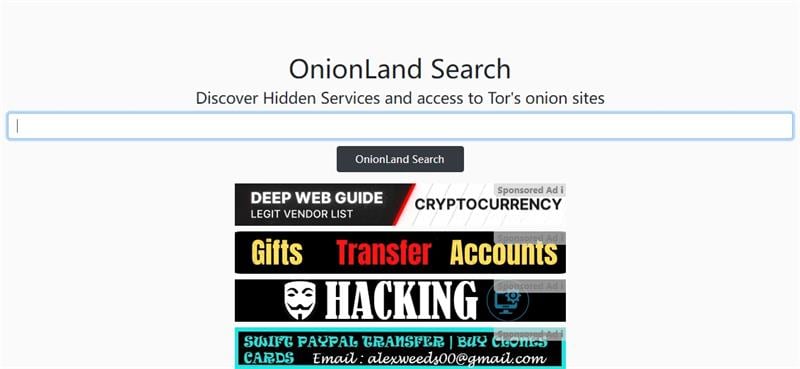
It is crucial for users to exercise caution and adhere to legal and ethical boundaries when using Torch or any other darknet search engine. Responsible usage is key to ensuring a safe and secure online experience. Other dark web search engines worth investigating are Ahmia, Torch, NotEvil, and the Onion URL Directory—just type out some keywords for what you’re looking for. Some of these sites can be found through regular web browsers, but you’ll then need to switch over to Tor once you’ve got the onion links you want to follow. Using a dark web search engine is not illegal, and accessing dark web sites and services is generally legal. However, engaging in illicit activities on the dark web is illegal—just as it would be anywhere else—and punishable by law.

More Ways To Stay Safe On The Dark Web
Since it’s an old search engine that hasn’t changed much, its indexing, while broad, is not always reliable. Many links found there are outdated or broken, and it provides very little metadata or context for search results. Torch also offers no real filtering or sorting options, making it inefficient for users who need to conduct targeted searches. Exploring the dark web can provide valuable insights and essential privacy, but it requires careful, informed navigation.
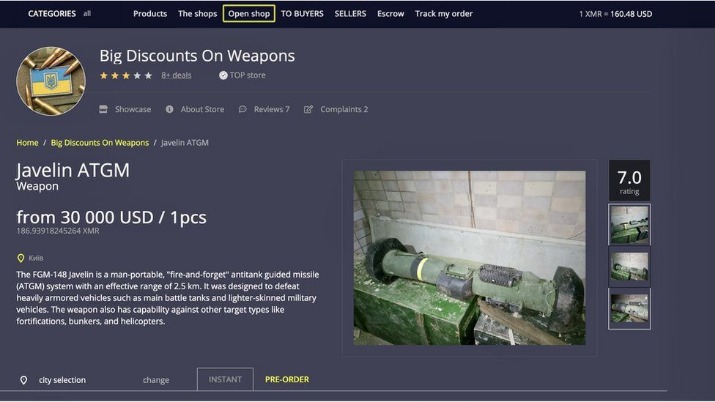
It will encrypt your traffic and data so no one can intercept it. Since the dark web is a hidden and uncontrolled part of the web, there is a high amount of malware infections present there. As a result, you should avoid opening unfiltered sources, torrent sites, and dark web links unnecessarily and downloading every file you come across. Your online activity and communications remain private and secret on the dark web. Because of this, some people use it to get around government restrictions, while others use it for illegal activities like smuggling drugs and weapons. Lastly, the dark web is the portion of the deep web that is generally inaccessible and is much larger than the surface web.
This dark web monitoring will help you track illicit activities and minimize the risks of cyber-attacks. You should be aware that law enforcement agencies may be monitoring the dark web and that visiting certain websites or engaging in illegal activities can result in criminal charges. You can also check out this ultimate dark web safety guide to browse safely. To protect your data from the websites you visit, one of the most effective steps is to hide your IP address, which can reveal your location, identity, and browsing habits. Using a virtual private network (VPN) masks your real IP by routing your internet traffic through a secure server, making it appear as though you’re browsing from a different location. A VPN also encrypts your connection, keeping your data safe from surveillance and unauthorized access.
How To Access The Dark Web: Step-by-Step Tutorial (and A Few Words Of Caution)
It provides more privacy than regular search engines, but it mostly indexes the surface web and is not specialized for deep or dark web content. It’s the process of scanning dark web markets, forums, and .onion sites for specific identifiers, such as email addresses, passwords, or company data. Specialized dark web monitoring services continuously scan the dark and deep web using tools specifically designed for that and extensive indexing methods to look for compromised data.
Misconfigured UN Database Exposes 228GB Of Gender Violence Victims’ Data
- Whether on the clearnet or the dark web, using search engines and other browsing tools can lead to data leaks that expose your search history and other personal information.
- Indeed, most nations; including the United States, the United Kingdom, and India, allow access to the dark web as a lawful activity.
- Once you have the Tor Browser installed, launch it and click “Connect.” That’s it!
- Pitch is a dark web-based Twitter/X alternative, providing a secure platform for anonymous discussions and information sharing.
- It scans for keywords and topics and uses algorithms to deliver relevant pages.
Always remember that the dark web is a people-centric community. So, it’s only natural to find ways to keep in touch with your darknet buddies and/or customers. There are several email and IM services which you can use, and it’s highly recommended to pick one if you want to step up your dark web game. Services like Random Chat connects you with random people using the same service. Next step – your request will be transferred to Tor entry nod which in turn transfers to one or more Tor relays.
Popular Dark Web Search Engines: An Overview Of Ahmia, DuckDuckGo onion, Torch, And Not Evil
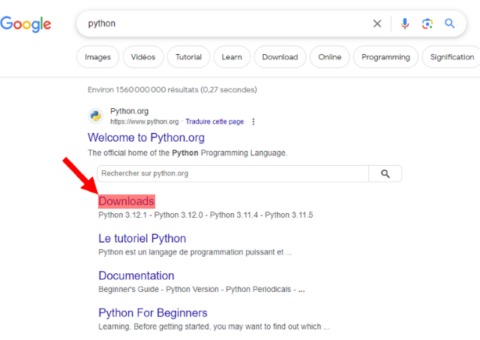
(The installation instructions that follow are for the macOS platform, I’ll mention where it’s different for Windows.) Simply double-click the downloaded file in your download folder. Instead, you need to get the Tor browser to access the dark web. Make sure that when you download the Tor file, it’s from their official website. It’s impossible to access the dark web with a regular browser like Chrome or Safari.
Commercial Services
Use antivirus software to scan files and, if possible, open them in a secure, isolated environment. If you only want to mask your IP address and don’t need to access the dark web, then going online with a VPN is much easier and faster than using Tor. These domain names are not registered with a central authority but are instead derived from cryptographic keys. Following the NYT, the BBC launched a dark web “mirror” of their international edition in 2019. Note that some features of the normal website are not available on the .onion version, including BBC iPlayer. TorDex fails to provide relevant search result and for many searches it returned zero result.
Can You Be Traced On Tor?
Ahmia’s design allows users to search for Tor hidden services without compromising their anonymity. By utilizing a distributed search infrastructure, Ahmia ensures that no single entity has complete control over the search results, enhancing privacy and avoiding centralized censorship. Ahmia goes beyond being just a search engine; it is used to read statistics, insights, and news related to the Tor network. Ahmia provides a useful initial service for people who want to explore the dark web. To access the dark web, we run our search engine after installing one of the Tor, etc. search engines. After accessing the links with the .onion extension by searching, try to reach reliable or known sources by paying attention to the security and privacy rules of the pages.
Think about what matters most for your browsing and security, and make informed choices to navigate the dark web safely. It’s specifically designed for privacy, routing your connection through the Tor network to hide your IP address and encrypt your traffic. Built-in features like script blocking and anti-tracking ensure a safer browsing experience. Venus crawls and gathers a wide array of onion sites, ensuring you have access to the latest information available on the dark web.
With all of that in mind, you need to tread carefully when browsing, in terms of the sites you visit and the other users you interact with. Bear in mind too that laws about freedom of speech and censorship vary from country to country, which is part of the reason the dark web exists in the first place. Sections of the dark web are often closed down too, as part of police operations. Individual sites on the dark web look much like they do on the regular web, though a lot of them are a bit more rough around the edges. (Presentation and polish isn’t quite so important on this part of the internet.) Click on any website link, and it’ll appear on screen, with its address at the top.
Useful for public threat research, though limited in index depth. Designed to mimic Google’s layout, NotEvil gives safe, readable results. Known for its massive index and premium version, Haystak is favored by cybersecurity professionals and threat analysts for its depth. Are Wi-Fi hosts and owners able to see what you’re doing online? In addition, it has an automatic kill switch (Network Lock) that stops traffic if the VPN connection fails. Accidental leaks at the Tor entry nodes can potentially expose your IP address.
The core principle of the Tor network was first developed by U.S. Naval Research Laboratory mathematicians and computer scientists in the mid-1990s. The U.S. Army developed “onion routing” to protect intelligence communications online.