
At the center of this transformation is generative AI, the powerful force that redefines both offense and defense in the world of digital identity. New data from Sumsub has claimed the creation of fake documents using AI grew by 195% worldwide between Q and Q1 2025. Reports of scams to government agency Scamwatch have been on a sharp rise since 2020 but seem to have peaked in 2022, with scams via phone and social media incurring the biggest losses for Australians. Scams using Mr Koch’s photo and fake quotes by him to promote the fraudulent investment schemes have caused huge headaches for the presenter who has warned his social media followers not to fall for it. Regularly update Tor Browser, VPN software, and operating systems to patch new vulnerabilities. Limit the number of add-ons or external tools that could create leaks.
DuckDuckGo — Private Search Engine That Can Access The Dark Web

These sites can be used by both hackers and individuals looking to exploit vulnerabilities. Fake ID suppliers are now offering hyper-local designs to match the latest versions of IDs from specific states, provinces, or countries. In the U.S., for example, each state has unique security features—holograms, UV patterns, and font styles. In 2025, fake ID creators keep up with every update, offering region-specific versions that are nearly indistinguishable from genuine IDs.
Cybersecurity Awareness Explained: Importance & Best Tips 2025

These inconsistencies create enforcement challenges and uneven outcomes. Most concerning is the incorporation of functional magnetic stripes and barcodes that actually contain encoded information matching the fake details on the front of the card. As one anonymous former producer told us, “The goal isn’t just to fool a bouncer’s visual inspection—it’s to create something that will scan properly in a system.” An April 2024 Government Accountability report estimated that as much as $521 million is stolen annually from federal programs.
Real-time Deepfake Fraud In 2025: Fighting Back Against AI-driven Scams
- For example, Whonix’s virtual workstation machine connects to the internal virtual LAN.
- You can also run a dark web scan to see if your information has been leaked on the dark web.
- However, by familiarizing yourself with the common types of fake IDs—borrowed, altered, and forged—you can better identify these fraudulent documents.
- With this transformation comes both the power to protect identities and the tools to exploit them.
It includes all the essential productivity software, including MS Word and an email client. However, there are some significant variances in the background despite the similarities. For example, Whonix’s virtual workstation machine connects to the internal virtual LAN. It can only interact with the gateway, the most effective method by which the browser protects user applications from learning a device’s IP address. While it might appear tempting to venture into the dark web, it’s crucial to understand that the risks here are far more severe compared to the deep web. No one is hiding here—they’re just guaranteeing that people in censored countries can read the news without being flagged.
Buy Scannable Fake IDs – We Make Premium Fake ID
Active for a decade since 2014, it is a widely used credit card shop used to source stolen credit card information such as dumps, CVVs, Wholesale Accounts. As a community of fraud professionals, the ACFE PNW Chapter encourages continued education and awareness to strengthen our collective efforts in the fight against fraud. – Transaction anomalies, such as conducting large transfers during off-hours or repeatedly updating personal details, may indicate compromised accounts.
V2 Vs V3 Addresses – Why V3 Is The Standard
Because it relies on relays, disruptions can make a site look offline for hours or days. These systems require more effort to set up but provide strong defenses. It hides Tor usage from your provider and adds one more layer of encryption. Pick a VPN that keeps no logs and operates outside strict surveillance zones. That is why it is called “onion routing”—layers of encryption hide the route. Onion routing protects your identity by sending traffic through several relays.
- Law enforcement has a long history of disrupting dark web markets and seizing onion services.
- ZLibrary hosts free file-sharing access to academic texts, scholarly articles, and general-interest books.
- The darknet version of DuckDuckGo is not a search engine for the dark web, but a private browsing tool for the dark web.
- Downloading Tor or browsing .onion sites doesn’t break any laws on its own.
- If shipping to the United States, this method will add $75 to your total.
Case 1: International Student Fraud Rings

Together, these tools show how hidden services can meet everyday needs while respecting privacy. Normal URLs rely on centralized DNS systems, while onion addresses use decentralized routing within Tor. For privacy-minded users, these domains serve as a doorway to a part of the internet built around anonymity and resistance to surveillance.
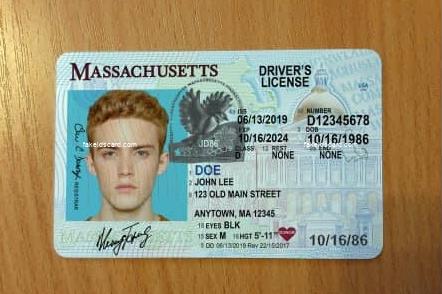
Users can generate customized documents in minutes, raising concerns about its potential for fraudulent activity. Document verification solutions should check for inconsistencies in images and text, while also evaluating data patterns that may suggest tampering or forgery. Additionally, integrating third-party checks, such as DMV database checks, can significantly increase the chances of catching fake IDs. We caught 84% of the AI-generated fake IDs with image and symbology analysis alone. When combined with third-party database checks, we were able to catch 99.6% of the fraudulent IDs.
In addition to government-led initiatives, private sector engagement has emerged as a vital component in the fight against fake IDs. Leading technology firms and financial institutions are investing heavily in advanced verification systems that promise to outpace counterfeiters. Companies specializing in cybersecurity and digital identity verification have partnered with state governments to pilot innovative solutions that integrate artificial intelligence with biometric data analysis. These collaborations aim to create dynamic security protocols that can adapt in real-time to new counterfeiting methods, ensuring that both physical and digital forms of identification remain secure. Researchers at threat intelligence and security experts Group-IB have already demonstrated that liveness detection in facial biometrics is no longer a verification gold standard.
Fake IDs And Documents On The Dark Web: Where They Come From And The Risks

While some major marketplaces have been taken down in the past, new ones always emerge. Many now rely on decentralized hosting and blockchain-based platforms to evade detection. Meanwhile, in Phoenix, Arizona, authorities traced a series of identity theft cases to a single source of fake IDs. The documents, which featured accurately reproduced holograms and microprinting, were linked to over $2.1 million in fraudulent credit card applications and retail purchases before the producers were apprehended. High-resolution digital scanning and printing equipment, once accessible only to professional printers, has become affordable enough for basement operations. Specialized UV-reactive inks mimic the security features of official documents.
Tor, designed by mathematician and computer scientist Roger Dingledine, along with two colleagues, emerged as an open-source project in the early 2000s. It aimed to provide online privacy by routing internet traffic with a series of volunteer-operated servers, encrypting the data at each step, and making it challenging to trace the user’s identity. Unsurprisingly, college students and teenagers remain one of the biggest demographics for fake ID use in 2025.
Secure Operating Systems (Tails, Whonix, Qubes)
Sellers often need to pay a deposit to prove they’re serious, and they build their reputation through positive reviews. Others are looking for stolen data, hacking services, or even banned books and political content. For sellers, it’s often about making money while staying off the radar. Certified Fraud Examiners play a critical role in mitigating the impact of AI-driven fraud. By incorporating forensic analysis techniques and collaborating with cross-functional teams, CFEs can help identify synthetic identities, expose fraudulent schemes, and strengthen organizational defenses.
We quickly ran the ID through our software to see if the barcode generated by CloudPassport would fool any of our barcode security tools. The AI-generated fake ID does not pass our identity verification software. Several of the news articles referenced the Telegram application and a shared channel where fraudsters were discussing their new, AI-created fake ID images. At the beginning of the now-locked thread we saw the following message in reference to the recent news.